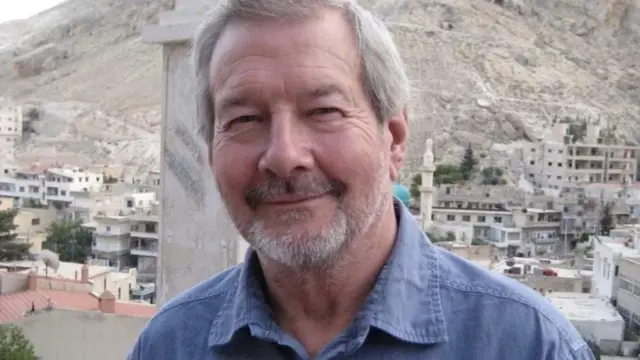
Ha muerto mi amigo Roger Matthews. Cubrió para Financial Times el fin de la Dictadura de Franco y la Transición a la Democracia. Excelente periodista y mejor persona. DEP.
SE NOS VIO EL PLUMERONOTICIA11 mar 2026 – 18:33JOSÉ ANTONIO MARTÍNEZ SOLERJAMS
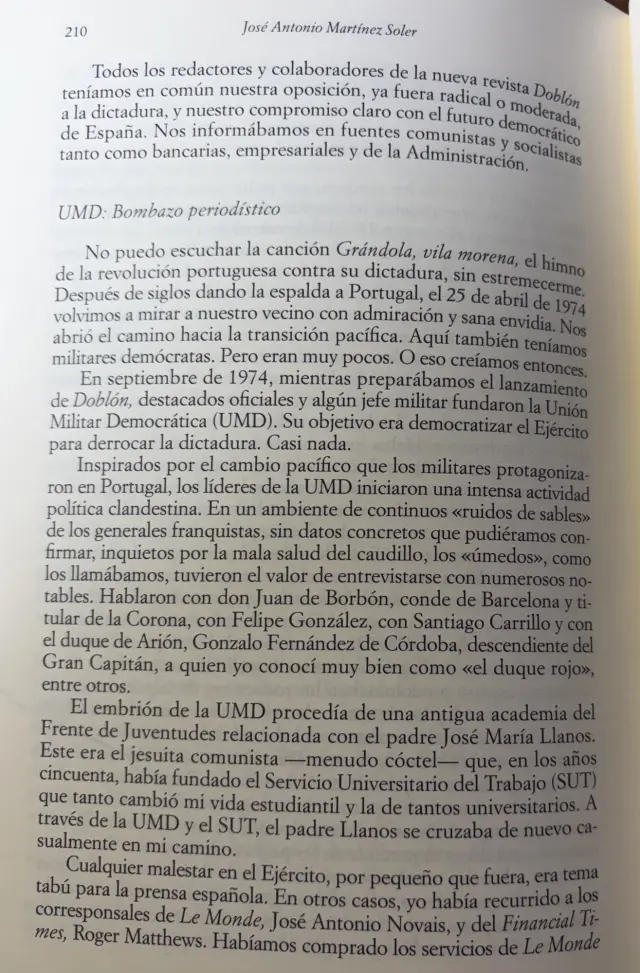
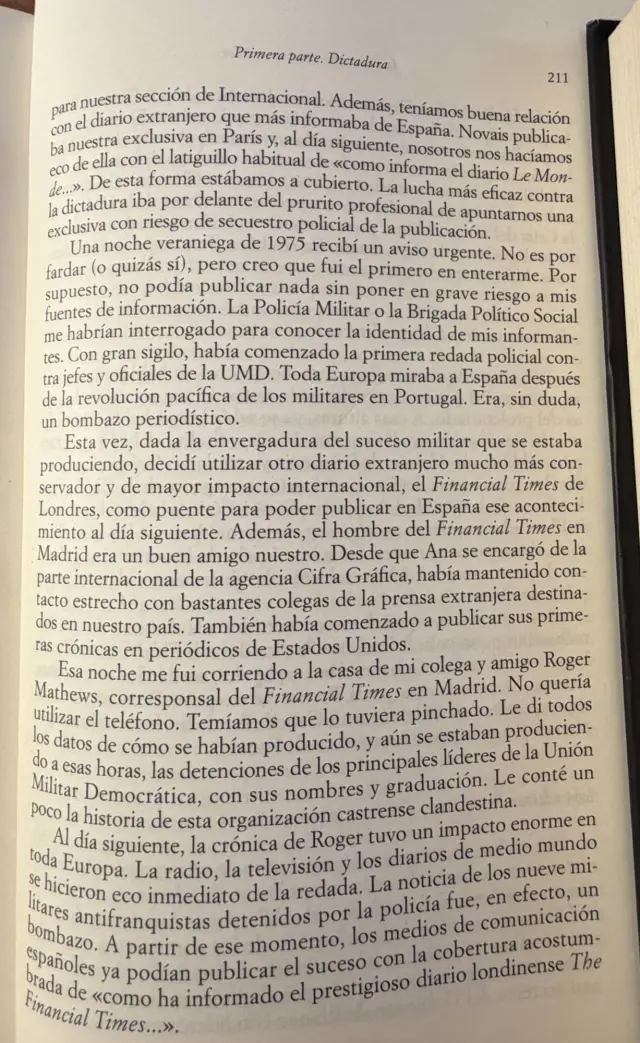
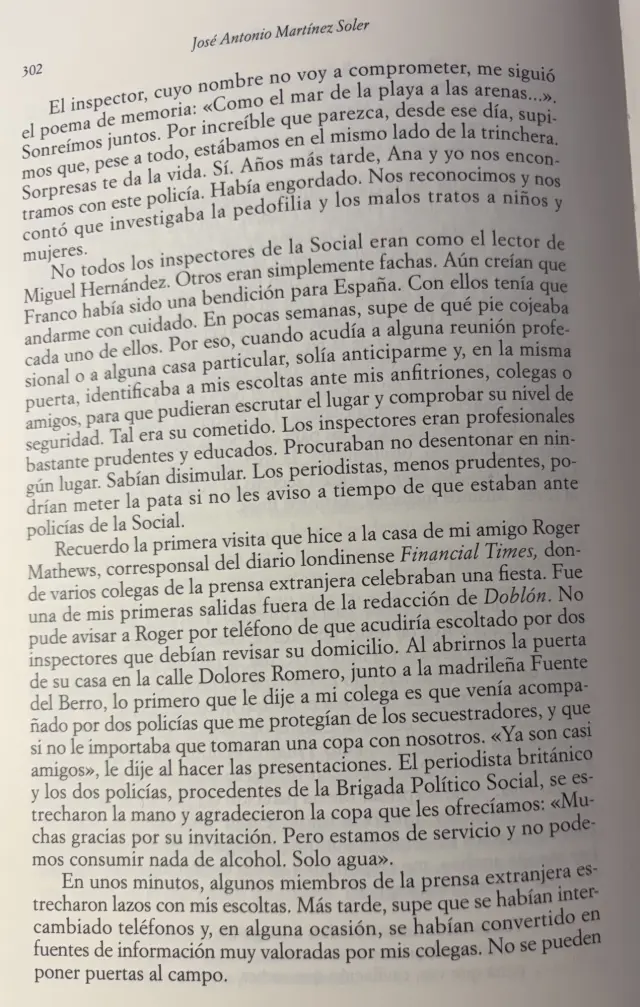
El Financial Times ha publicado un obituario excelente y merecido sobre su paso por Madrid, en años claves para nuestro futuro en libertad, Oriente Medio, Asia y Africa. Jured Martin escribe en FT que “en una profesión llena de super egos, el ex editor de Oriente Medio parecía no tener ninguno”. Lo disimulaba con su agudo sentido del humor. Tenía su despacho alquilado en la Agencia EFE (de la calle Ayala, 5). Gracias a mi esposa, Ana Westley (con oficina en Cifra/EFE, en el mismo edificio), y a nuestros encuentros en nuestras casas y en la cafetería Roma, donde había mas noticias de verdad que en la propia Agencia, entablamos una buena amistad.
Roger nos ayudó mucho a la hora de dar a conocer al mundo la realidad española, cuando la Dictadura no acababa de morir y la Democracia no empezaba a nacer. Yo le admiré profesionalmente. Compartí muchas noticias y risas con él. Y le quise mucho. Hasta le imité en la forma de vestir. Ambos compartíamos trajes vaqueros que, hace medio siglo, comprábamos en Austin Redd (en Regent Street). Mi amigo David White, que ocupó más tarde la corresponsalía del FT en Madrid, me dice que esa tienda ya no existe. Como feliz jubilado, no me hace falta. Desde que dejé la dirección general de 20 minutos, no utilizo trajes. Solo equipación para el tenis y el taller de escultura en madera.
Gracias, Roger. Nos has dejado una huella maravillosa. Los demócratas españoles estamos en deuda contigo. Mi más sentido pésame a Jane, su viuda, y a sus hijos Jason y Justine.
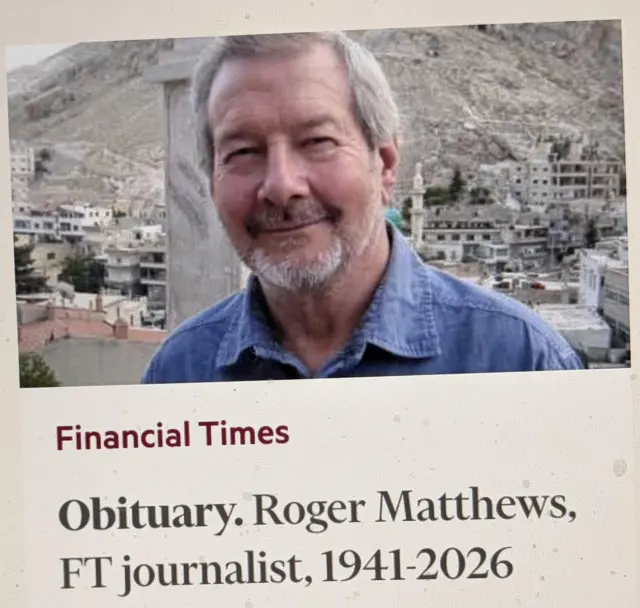
Obituario de Roger Matthews publicado por Financial Times:
Roger Matthews, FT journalist, 1941-2026
In a business filled with oversized egos, former Middle East editor appeared to have none
Jurek Martin
Roger Matthews, one of the FT’s finest foreign correspondents and editors in a career spanning more than three decades, has died at the age of 84. His postings took him to Madrid, Cairo, Singapore and Johannesburg, and he also served as the London-based Middle East editor in the early 1980s.
His stock in trade was an almost preternatural calmness. He always seemed able to rise above the maelstrom of events, not to mention the freneticism of a newsroom, and think about what was happening before delivering his considered judgment.
It was also remarkable that in a business filled with oversized egos, he appeared to have none. As Robert Graham, also an FT correspondent in the Iberian Peninsula and the Middle East, recounted, Matthews once told him he preferred “to row in the middle of the boat”.
In his quiet way, Matthews was always curious, using retirement to rent properties in interesting places, including a four-month stay in a Damascus palace and his last flat in Venice.
He was born on April 28 1941 and joined the FT in 1967 after graduating from University College London with a liberal arts degree. After a stint on the arts desk, he became a night sub-editor on the foreign desk where David White, himself a Madrid correspondent some years later, recalled “he had the art of being thoroughly professional without taking things too seriously” — as in his amusement that IRA militants were being trained in Libya, “a dry country”.
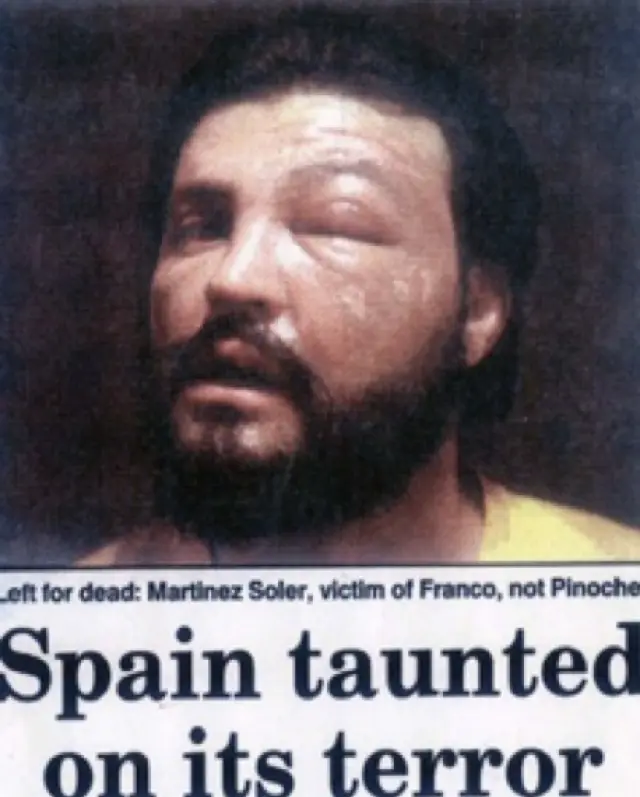
He surprised all in 1973 by choosing to leave the staff and try his luck freelancing for the FT in Madrid. This proved the making of him as a reporter. The twin dictatorships of Franco in Spain and Salazar in Portugal were unravelling, handing him the European story of a lifetime. His presence there, White recalls, allowed Spanish journalists to leak stories about Franco’s brutality and then reprint the reports published by the prestigious London daily.
He was next posted to Cairo, again at an opportune time as US diplomacy pushed Egypt and Israel into the Camp David agreements brokered by President Jimmy Carter. It followed that he would next become Middle East editor back at head office. Andrew Gowers, then a junior member of the FT team of Middle East reporters dubbed the “Camel Corps” and later FT editor, admired Matthews’ “sage and calm judgment”.
“He helped to ensure coverage that was sparing and sober in the face of a lot of sensationalist noise elsewhere,” Gowers said. But when there was a big conflict like the Lebanon and Iran-Iraq wars, Matthews was “laser-focused on ensuring that coverage took the full measure of their importance”.
“He had a very strong intuitive sense about who was likely to be a reliable interlocutor in a region that was particularly replete with fantasists and false prophets.”
These qualities apparently impressed another young journalist from the region. Roula Khalaf, the current editor of the FT, said: “Roger was one of the main reasons I came to the FT.” She said she was interviewed by him and immediately knew she wanted to work with him.
His next stop, covering south-east Asia from a base in Singapore, did not prove much of a rest stop. The global turmoil that embraced the fall of the Berlin Wall, Tiananmen Square in Beijing, the death of Ayatollah Khomeini of Iran and the collapse of the Soviet empire culminated in Saddam Hussein’s invasion of Kuwait and the subsequent military response by a US-led invasion of Iraq.
Without being asked, Matthews flew back from Singapore to London to lend a vital hand and his Middle East expertise to the FT’s coverage. Victor Mallet, of the Camel Corps, was getting reports out of Kuwait but was stuck there. Robert Graham, with all his knowledge of the region, was released from his Latin American harness, but the desk was still pushed. Matthews filled the need in spades.
Throughout his career, he had a sense of levity and joie de vivre. Years before Saddam Hussein set his sights on Kuwait, Matthews interviewed the Iraqi leader. On the flight out of Baghdad, he ordered champagne but was told the Iraqi airline had none on board. He then showed the air hostess a photo of himself with Saddam. Within moments, a full bottle appeared.
Roger Matthews wasn’t just a fine journalist. To many on the FT he was a great colleague, a good friend, a shoulder to cry on and, simply, a seriously good guy. He and his wife Jane were wonderful hosts to visitors wherever they were posted. He is survived by Jane, his son Jason and his daughter Justine, five grandchildren and four great-grandchildren.